


Wood adhesives and building PVAs are designed for different jobs. For woodworking, choose a dedicated PVAc wood adhesive such as Soudal D2 or D3. Building PVA is generally better suited to plastering, priming, sealing porous surfaces and improving cement mixes.
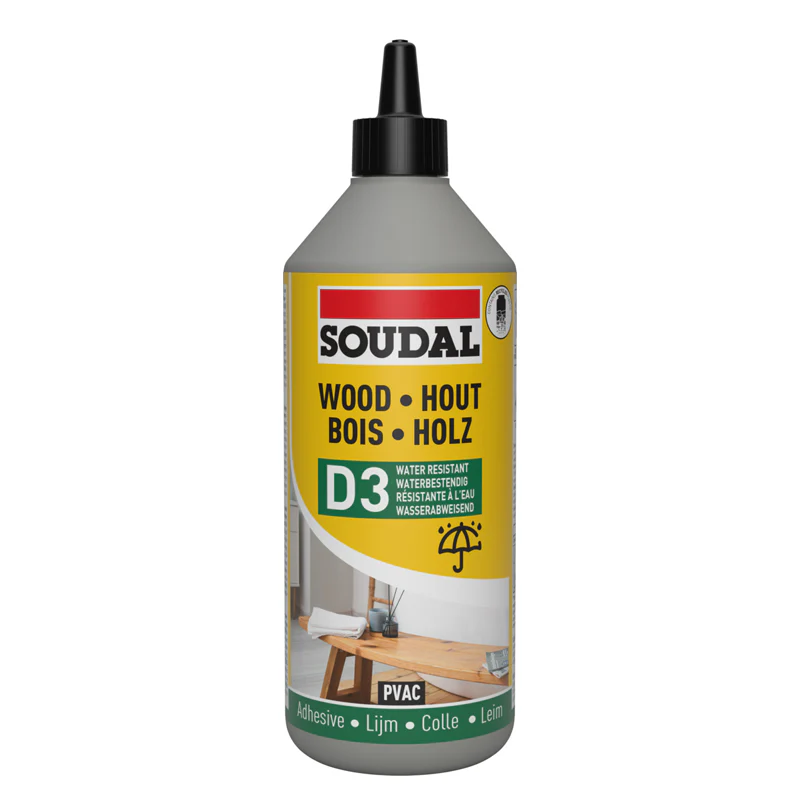
Moisture exposure also affects the choice of adhesive. Soudal D3 is suitable for high-humidity interiors and sheltered exterior applications, while several general-purpose building PVAs are intended for internal use only.
-
 £1.43 - £16.35 ex. VATSelect options This product has multiple variants. The options may be chosen on the product page
-
£1.24 - £3.48 ex. VATSelect options This product has multiple variants. The options may be chosen on the product page
-
£1.79 - £331.14 ex. VATSelect options This product has multiple variants. The options may be chosen on the product page
-
£11.51 - £34.24 ex. VATSelect options This product has multiple variants. The options may be chosen on the product page
-
£2.91 - £79.17 ex. VATSelect options This product has multiple variants. The options may be chosen on the product page


Which PVA Adhesive Should You Choose?
The main distinction is between bonding materials together and preparing surfaces for building work. For wood joints, consider the water resistance and drying properties of the adhesive. For plastering, rendering and general building work, the intended application and substrate will determine which PVA is suitable.
| Product | Best Suited To | Key Features and Limitations |
|---|---|---|
| Soudal D3 PVAc Wood Adhesive | Woodworking in high-humidity interiors and sheltered exterior locations | D3 water resistance |
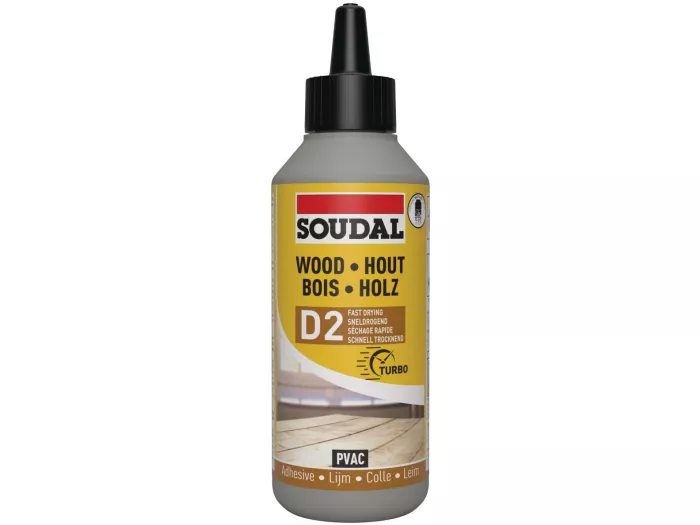
| Soudal D2 PVAc Wood Adhesive | Wood joints, softwood assembly, boards and veneer | Ultra-fast drying with a transparent finish |
| Bond It Contractors PVA | Plaster priming, porous surface sealing and general bonding | Internal building applications |
| SikaBond Contractors PVA+ | Priming, sealing, screeds and renders | Not suitable for exterior use or constant damp |
| Sika SikaBond PVA+ | Porous material bonding and mortar improvement | Internal use only, excluding load-bearing wood bonding |
D2 or D3 PVA Adhesive for Woodworking?
Soudal D2 PVAc Wood Adhesive is a ready-to-use adhesive for woodworking joints, including mortise and tenon joints and the assembly of softwood components. It also bonds chipboard, veneer, wood and paper products. It is ultra-fast drying and dries transparent.
Soudal D3 PVAc Wood Adhesive is better suited to woodworking where greater water resistance is needed. The manufacturer’s stated applications include wooden construction elements, window and door frame manufacture, high-humidity interiors and exterior applications with limited weather exposure.
Both adhesives are applied to one of the surfaces before the parts are joined. Soudal D2 requires pressure for at least 30 minutes, while the general application instructions for Soudal D3 specify a clamping time of one to two hours. Clamping time is different from full curing time, which depends on the wood, temperature, amount of adhesive applied and material porosity.
For other woodworking jobs, compare our range of wood adhesives or read our guide to bonding wood to wood.
Choosing a Building PVA for Priming and Bonding
Depending on the product, building PVA can be used as a primer, porous surface sealer, general-purpose adhesive or admixture for cement-based materials. Suitable substrates and dilution ratios vary between products.
Bond It Contractors PVA is suitable for plaster, cement, timber, plasterboard and paper. It can be used for dust sealing, rendering key coats and priming porous surfaces. For general priming, the specified dilution is one part PVA to two parts water.
SikaBond Contractors PVA+ is suitable for priming before plastering, painting or tiling, as well as bonding screeds and renders to difficult substrates. Its general priming ratio is one part PVA to four parts water. PVC and rubber are excluded from its suitable substrates.
Sika SikaBond PVA+ can be used to bond plaster, cement screeds and renders to sound concrete, stone and brick surfaces. It also bonds porous materials such as wood, cork, paper and textiles.
Preparing Surfaces and Applying PVA
For these building PVAs, surfaces should be clean, dry and free from dust, grease and loose material. The dilution and method of application will depend on whether the PVA is being used as a primer, bonding coat or admixture.
Bond It Contractors PVA and SikaBond Contractors PVA+ have different general priming ratios, so the same dilution should not be assumed for both products. Application instructions and dilution ratios are important when comparing our range of PVA bonding agents.
Frequently Asked Questions About PVA Adhesive
Is PVA adhesive waterproof?
Water resistance varies between PVA adhesives. Soudal D3 offers greater water resistance than D2, but this does not mean it is fully waterproof or suitable for unrestricted exterior use. SikaBond Contractors PVA+ is unsuitable for exterior applications or areas exposed to constant damp.
Can building PVA be used as wood glue?
Several building PVAs are suitable for bonding timber, but dedicated D2 and D3 PVAc wood adhesives are designed specifically for woodworking joints. Sika SikaBond PVA+ excludes load-bearing and exterior wood adhesive applications.
Can PVA adhesive be used before plastering?
Yes. Bond It Contractors PVA and both SikaBond building PVAs covered in this guide are suitable for priming and plaster bonding. The dilution ratio and application method vary according to the product and whether it is being used as a primer or bonding coat.